

Marine T Beam Welding Line Automation in Indonesia and Vietnam: Hualian Drives Shipyard Modernization
The modernization need in Southeast Asian shipyards
Traditional shipyard fabrication relies on manual shielded metal arc welding and semi-automatic flux-cored wire welding on open assembly grids. These manual methods create severe throughput bottlenecks, high welder labor costs, and unpredictable structural rework. Furthermore, tropical coastal humidity and frequent monsoon rains disrupt open-air welding operations, causing moisture-induced porosity in structural hull welds. Modernizing into an indoor automated T-beam production line provides controlled manufacturing conditions, protecting weld arcs and ensuring consistent fabrication schedules. Indoor mechanized fabrication shields operators and sensitive welding fluxes from coastal downpours, enabling shipyards to maintain steady production rates year-round. Transitioning fabrication indoors also improves workplace safety and air quality, helping shipyards attract and retain skilled structural steel fabricators.
Enclosed automated lines reduce airborne welding fumes, creating clean workshop environments that comply with modern industrial health standards. Manual fillet welding on long hull profiles consumes massive volumes of stick electrodes and generates heavy airborne slag dust. Transitioning to automated submerged arc welding encapsulates the electric arc beneath a protective flux layer. This clean operating process dramatically reduces atmospheric particulate emissions across indoor fabrication facilities. Enclosed production bays equipped with automated fume extraction systems maintain clean breathing air for operating technicians. Eliminating toxic welding smoke improves workshop visibility and employee retention in competitive regional maritime industrial zones.
An integrated T-beam line coordinates three production stages
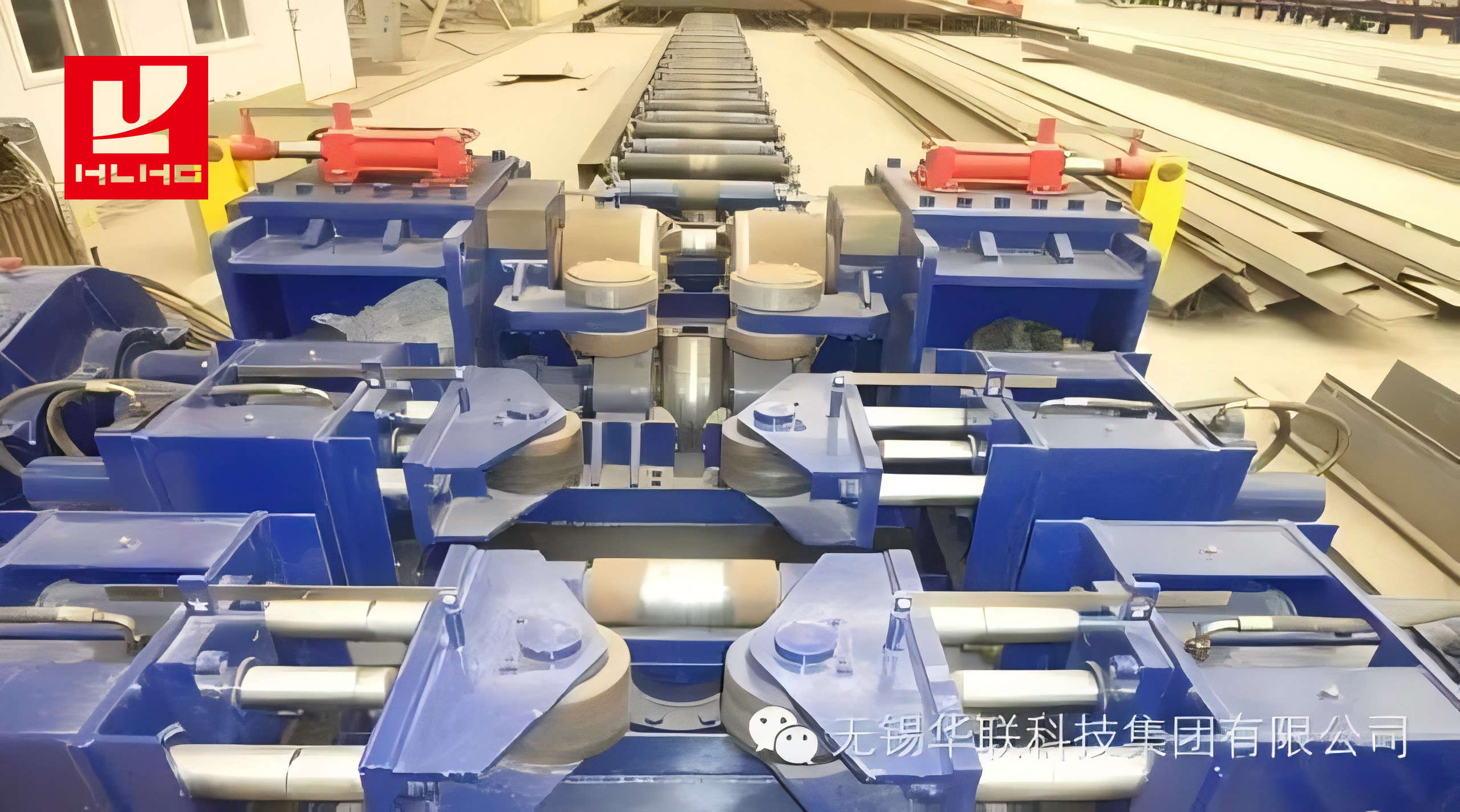
A comprehensive marine T-beam line unites three sequential manufacturing operations into a continuous conveyorized route. First, an automated hydraulic assembly bed aligns the web plate onto the flange, centering the joint under heavy hydraulic clamping pressure. Synchronized tack welding heads deposit rigid structural tacks along the joint seam. Second, the tacked profile transfers to a dual-torch submerged arc welding gantry. Simultaneous twin-fillet welding deposits deep-penetration welds along both sides, preventing asymmetric thermal warpage.
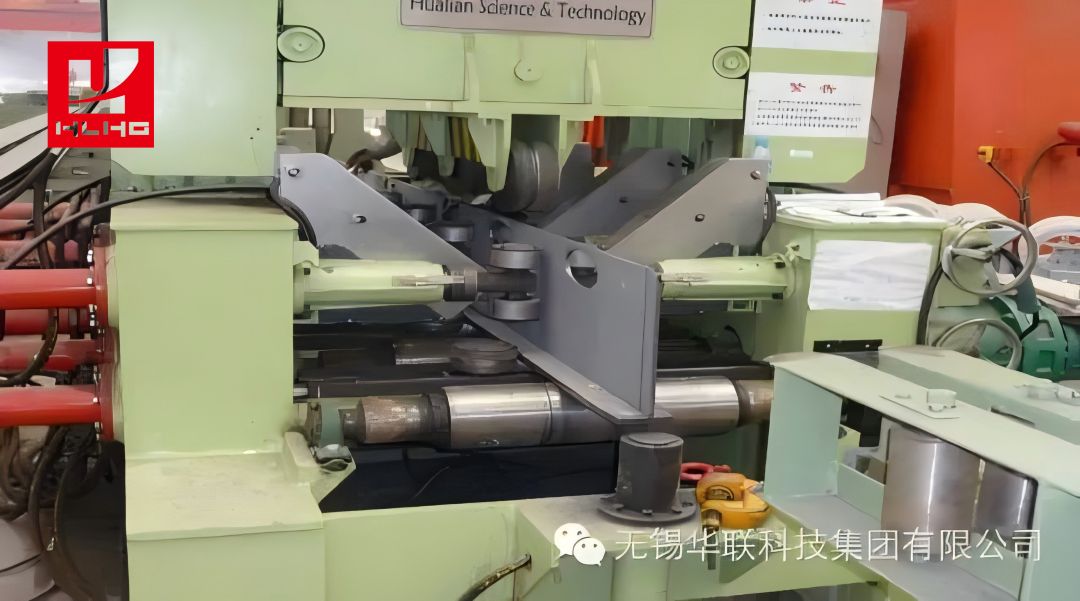
Third, the welded profile enters an integrated HL06-00T hydraulic straightening machine. The unit processes flange thicknesses from 10 mm to 50 mm and web thicknesses from 8 mm to 30 mm. It straightens sections up to 800 mm high at a correction speed of 8 meters per minute. Heavy-duty mechanical rollers hydraulically correct angular flange warpage back to true perpendicular tolerance, ensuring completed profiles satisfy strict IACS shipyard rules. Automating these three core operations on a connected roller conveyor eliminates crane transfers, reducing profile handling time by more than fifty percent. Continuous mechanical straightening delivers flat, true profiles that fit flush against hull plating without costly hydraulic jacking on the erection grid.
Motorized centering rollers position web plates symmetrically against flange centerlines before tack welding heads engage. Automatic pneumatic clamping jaws lock the web securely in the vertical plane, eliminating assembly gaps. Precise mechanical centering guarantees that finished T-profiles satisfy strict bilateral balance criteria required for maritime bulkhead stiffeners. The hydraulic straightening unit incorporates hardened alloy steel correction rollers that resist abrasive wear from hot-rolled plate scale. Quick-adjust mechanical handwheels set roller gaps rapidly to match varying flange thicknesses between production batches.
How automation solves maritime structural bottlenecks
Deploying continuous T-beam automation eliminates crane transfer delays between cutting, welding, and straightening stations. Motorized roller conveyors advance heavy profiles smoothly, keeping cranes free for block erection. Mechanized submerged arc welding delivers uniform weld bead geometry and consistent root penetration that satisfies strict inspection standards from IACS societies, including ABS, DNV, and BV. Reduced angular warpage ensures seamless fit-up during subsequent hull block assembly, slashing fairing labor in the dry dock. Eliminating fit-up gaps and wavy profile edges saves hundreds of hours of flame straightening during module erection on the slipway. Tight dimensional tolerances also improve fatigue performance, extending the structural service life of commercial vessels operating in harsh offshore environments.
High-deposition submerged arc welding delivers deep, uniform root fusion that resists severe cyclic fatigue loads encountered in commercial shipping operations. Eliminating weld start-stop defects reduces non-destructive testing rejections, accelerating structural block release into final shipyard paint bays. Precision T-profile dimensions simplify robotized welding of transverse hull frames during three-dimensional block assembly. Uniform stiffener geometry prevents robot vision sensor tracking errors, ensuring uninterrupted automated welding in downline fabrication halls.
Plan the change in people's work alongside the equipment
Successful technology adoption requires pairing new automated machinery with comprehensive workforce training. Transitioning from manual stick welding to automated gantry controls changes operator daily responsibilities. Shipyard fitters and welders must be trained to operate digital touchscreen consoles, calibrate optical seam tracking sensors, and monitor flux recovery circuits. Building local technical proficiency ensures long-term operational reliability and high machine uptime. Developing internal maintenance capabilities empowers shipyard technicians to conduct routine lubrication, seal replacements, and electrical diagnostics independently. Empowered operators take ownership of production parameters, continuously refining welding travel speeds to match varying steel plate batches. Cross-training floor operators in basic electrical troubleshooting and pneumatic maintenance reduces reliance on external service technicians. Operators capable of diagnosing sensor faults keep automated welding lines running at peak productivity.
A phased modernization roadmap for expanding yards
Shipbuilders balancing capital expenditure budgets can execute modernization programs through a disciplined four-phase implementation roadmap. Phase 1 focuses on civil foundation preparation and mechanical alignment, validating reinforced concrete slab levels and aligning machine centerlines across the full bay length. Phase 2 encompasses electrical integration and dry-cycle testing, terminating three-phase power, verifying sensor signals, and testing emergency stop circuits. Phase 3 executes parameter qualification and live submerged arc trial welding on marine steel plates to satisfy non-destructive testing criteria. Finally, Phase 4 concludes with commercial commissioning, production shift validation, and comprehensive operator maintenance training.
Modernize shipyard T-beam fabrication with Hualian
Investing in automated T-profile fabrication provides a scalable foundation for modern shipbuilding productivity. Sizing equipment around target vessel designs ensures capital investments deliver rapid operational returns.
Shipyard executives and marine engineering managers in Indonesia and Vietnam can explore customized T-beam production line layouts, equipment capacities, and commissioning support with Hualian: https://www.hualianoversea.com/. Hualian partners with regional shipbuilders to establish high-efficiency structural manufacturing facilities.
Wuxi Hualian Science & Technology Group
Hualian
email us here
Visit us on social media:
YouTube
Legal Disclaimer:
EIN Presswire provides this news content "as is" without warranty of any kind. We do not accept any responsibility or liability for the accuracy, content, images, videos, licenses, completeness, legality, or reliability of the information contained in this article. If you have any complaints or copyright issues related to this article, kindly contact the author above.
