
The blue economy, explained
The ocean is one of the world’s most valuable economic assets, but there is very little investment in sustainable ocean development.
The blue economy refers to the sustainable use of the ocean for economic growth. It is a way to unlock investment for marine conservation, strengthen coastal communities and advance ocean–climate action.
What is the blue economy?
The blue economy includes all economic activity that depends on and affects the health of ocean ecosystems.
This includes fisheries and aquaculture, maritime transport and shipping, coastal and marine tourism, and marine renewable energy. It also covers marine biotechnology, ocean-based research and blue carbon ecosystem protection. Seagrass meadows and mangroves are examples of blue carbon ecosystems.
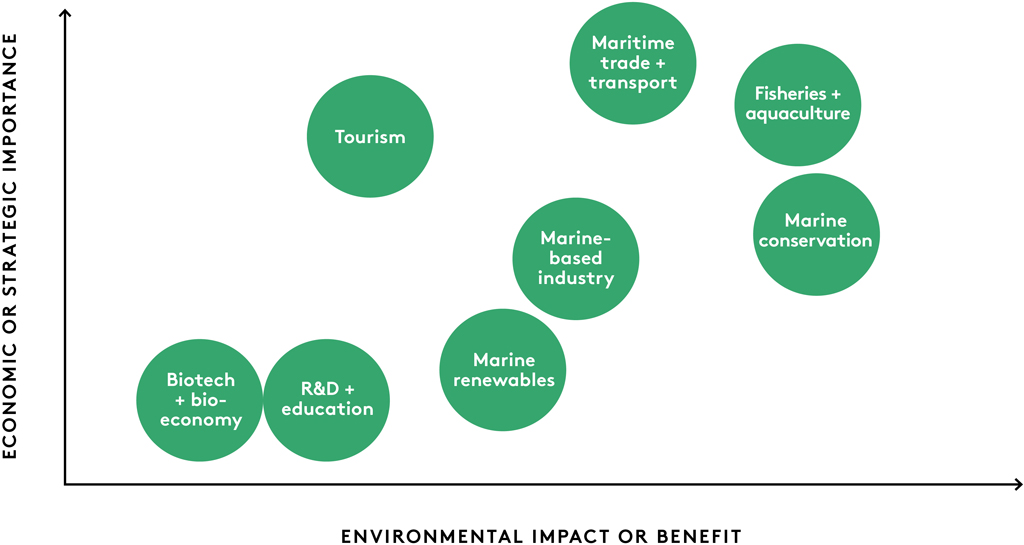
Instead of treating these sectors separately, a blue economy approach recognises they’re economically connected, environmentally interdependent and often financially linked.
Why does the blue economy matter?
The global blue economy is estimated to be worth US$1.5 trillion annually.
Yet only about US$13 billion has been invested in sustainable ocean projects in the decade up to 2022 – less than 1 per cent of the ocean’s estimated total economic value.
At the same time, marine ecosystems are under more pressure from overfishing, pollution, habitat degradation and climate change.
For many countries – particularly island and coastal states like Indonesia, where the ocean makes up about 75 per cent of national territory – healthy oceans are essential to economic prosperity and food security.
Without healthy ocean ecosystems, there can be no thriving blue economy.
How can the blue economy advance climate action?
Ocean-based solutions are one of the largest untapped opportunities for greenhouse gas emissions reductions.
Protecting and restoring blue carbon ecosystems – like mangroves and seagrass meadows – can bring big benefits. These ecosystems absorb and store carbon at rates up to 10 times faster than mature rainforests, mitigating billions of tonnes of greenhouse gas emissions annually.
Scaling sustainable fisheries, ocean food production, decarbonising ocean sectors such as shipping and developing ocean renewable energy could reduce global emissions by up to 11.8 billion tonnes annually by 2050. This is equivalent to about one-third of current global fossil fuel emissions each year.
To unlock this potential, countries need clearer investment standards, stronger ocean planning systems and better ways of accounting for the value of marine ecosystems.
With these foundations in place, investment can flow toward ocean protection and restoration at the scale required.
Read more
Legal Disclaimer:
EIN Presswire provides this news content "as is" without warranty of any kind. We do not accept any responsibility or liability for the accuracy, content, images, videos, licenses, completeness, legality, or reliability of the information contained in this article. If you have any complaints or copyright issues related to this article, kindly contact the author above.
